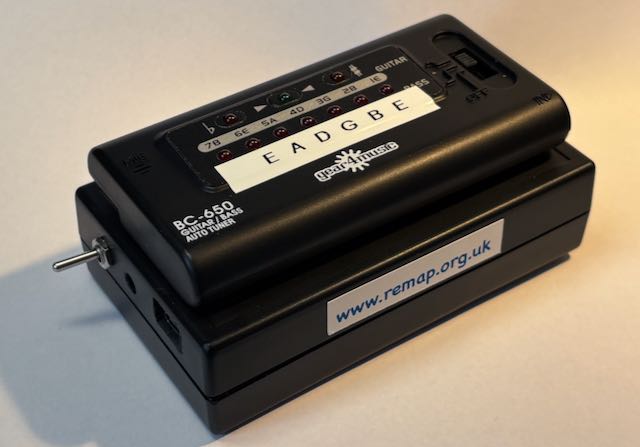
Talking Guitar Tuner
A previous excellent REMAP solution by Ian Mercer (Hertfordshire South), documented at https://remap.org.uk/solutions/audio-guitar-tuner/ for a guitar tuner with audible cues was the full inspiration for this new version. The new solution is based on a different commercial tuner and uses a current microcontroller board. A low-cost MP3 file-player module allows the tuner to speak the results to the user in an earpiece, using audio clips of his own voice.
The Challenge
The client loves to play the guitar, but being blind he finds tuning it difficult because cannot see a tuner’s screen and is not confident with tuning by ear. He needs to be able to hear what the tuner is indicating. There are no commercially-available guitar tuners which provide audible cues – they all provide just visual cues. He tried a number of Android and iOS apps, with the respective operating system’s vision accessibility features turned on, but found them too difficult to use.
The solution
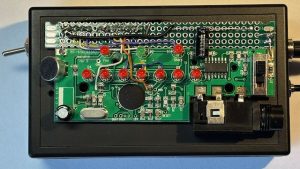
A standard Gear4Music BC-650 Guitar Tuner was modified as follows:
- the battery compartment was converted to be the location for an interface electronic board
- the voltages from the tuner’s indicator LEDs are wired to a header in the battery compartment
- the header extends to the add-on box which is fitted underneath the tuner
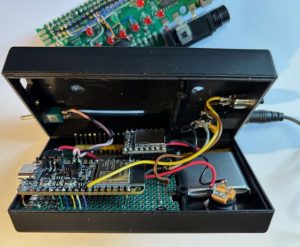
The add-on box was assembled to house the ESP32-S3 microcontroller, the DFPlayerMini audio player and a lithium polymer rechargeable battery. The microcontroller board incorporates a battery monitoring chip, which allows it to announce when the battery is getting low. A push button allows the user to select between four volume level steps.
The tuner is fixed to the top of the add-on box, with the header from the tuner connecting to the mating half in the add-on box.
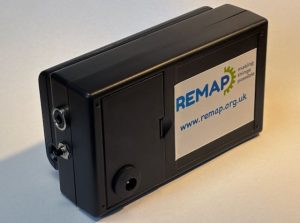
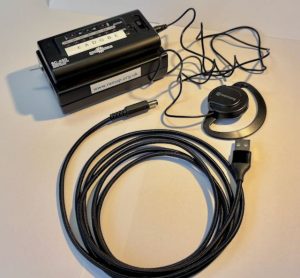
An earpiece is provided to hear the audible output. A USB charging cable is provided to charge the battery.
The schematic of the system is shown below:
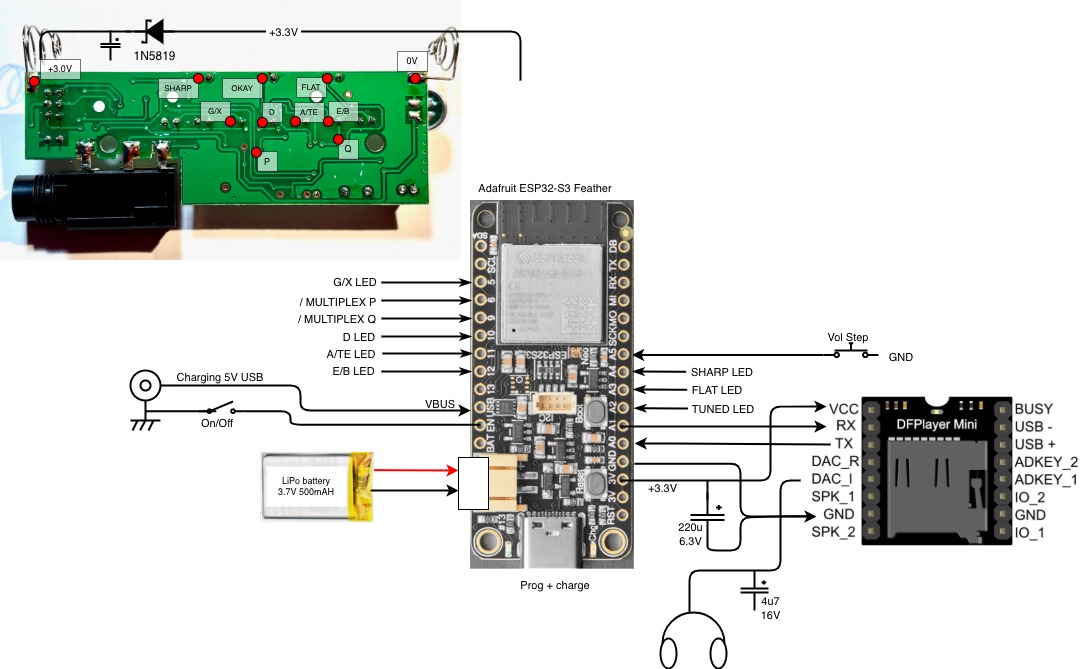
The software for the ESP32-S3 processor was written in C/C++ using the Arduino IDE. Libraries from Adafruit and DFRobot supported the modules. The design has to cater for the fact that the LEDs for the six strings are multiplexed in a 2 x 4 row/column arrangement which needed to be reverse-engineered to read it correctly. The code is available upon request.
The benefit
The client can now tune his guitars using the audio cues given via the earpiece, in his own recorded voice. This gives him more enjoyment, and confidence now when he performs in public.
- Skills involved:
- Issues Addressed:
- Activities Helped:
- Location:
- Solution: