Changing Bed Handrail Adaptation
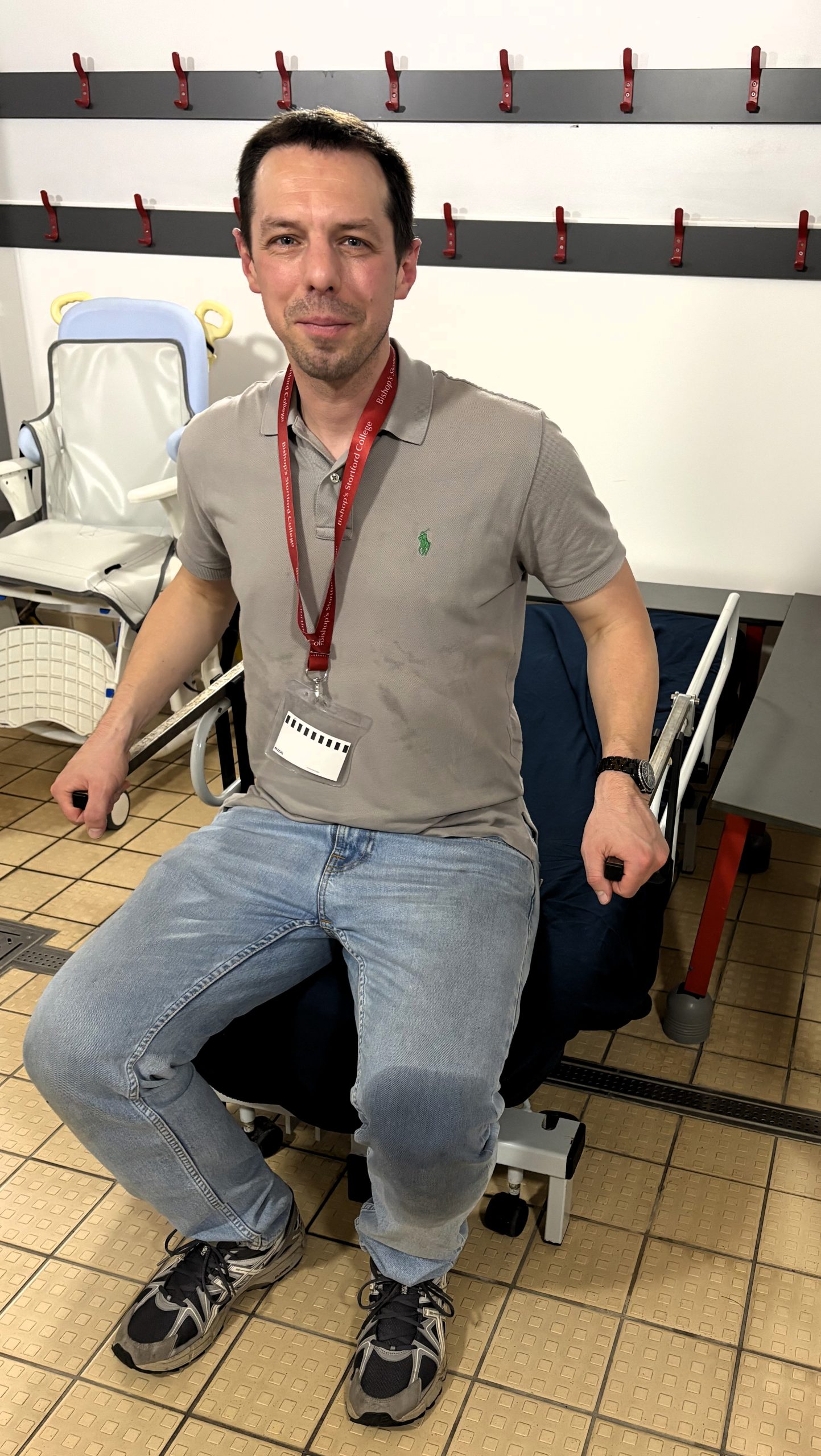
A student with cerebral palsy uses a standard NHS changing bed to prepare for swimming rehabilitation. However, the bed’s existing rails did not extend far enough to provide safe support when sitting at the end of the bed. This made changing both difficult and potentially unsafe – until REMAP stepped in to help. (image shows Michael Penman, REMAP engineer – demonstrating the solution)
The Challenge
The student wanted to change safely and with greater independence.
- The bed was not designed for sitting at the end
- Existing rails were too short to provide support in this position
- A support was needed that could take body weight
- It also had to move out of the way to allow access for a standing wheelchair
- Crucially, the solution could not permanently modify or damage the NHS equipment
This required a balance of strength, accessibility, and reversibility.
The solution
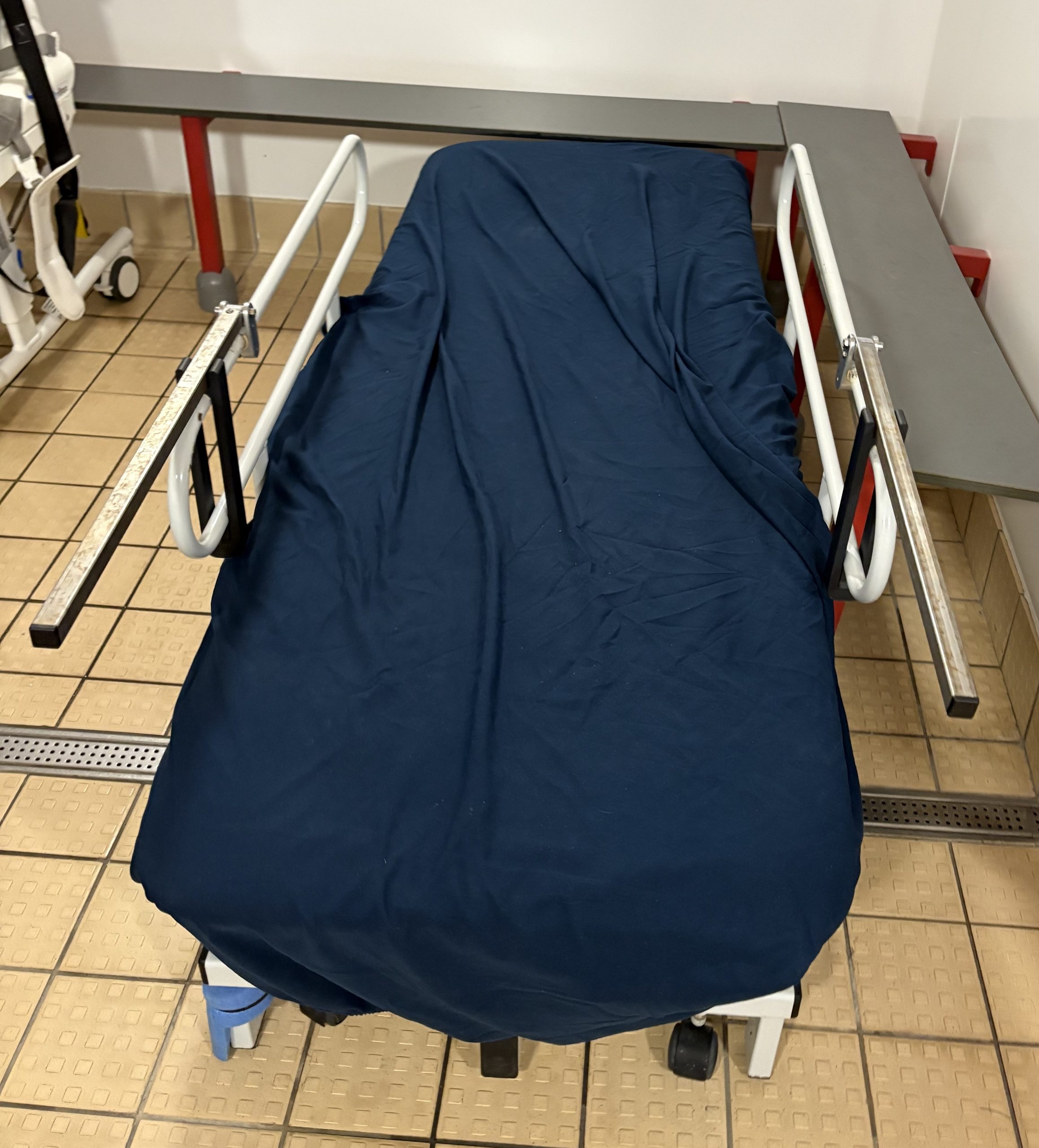
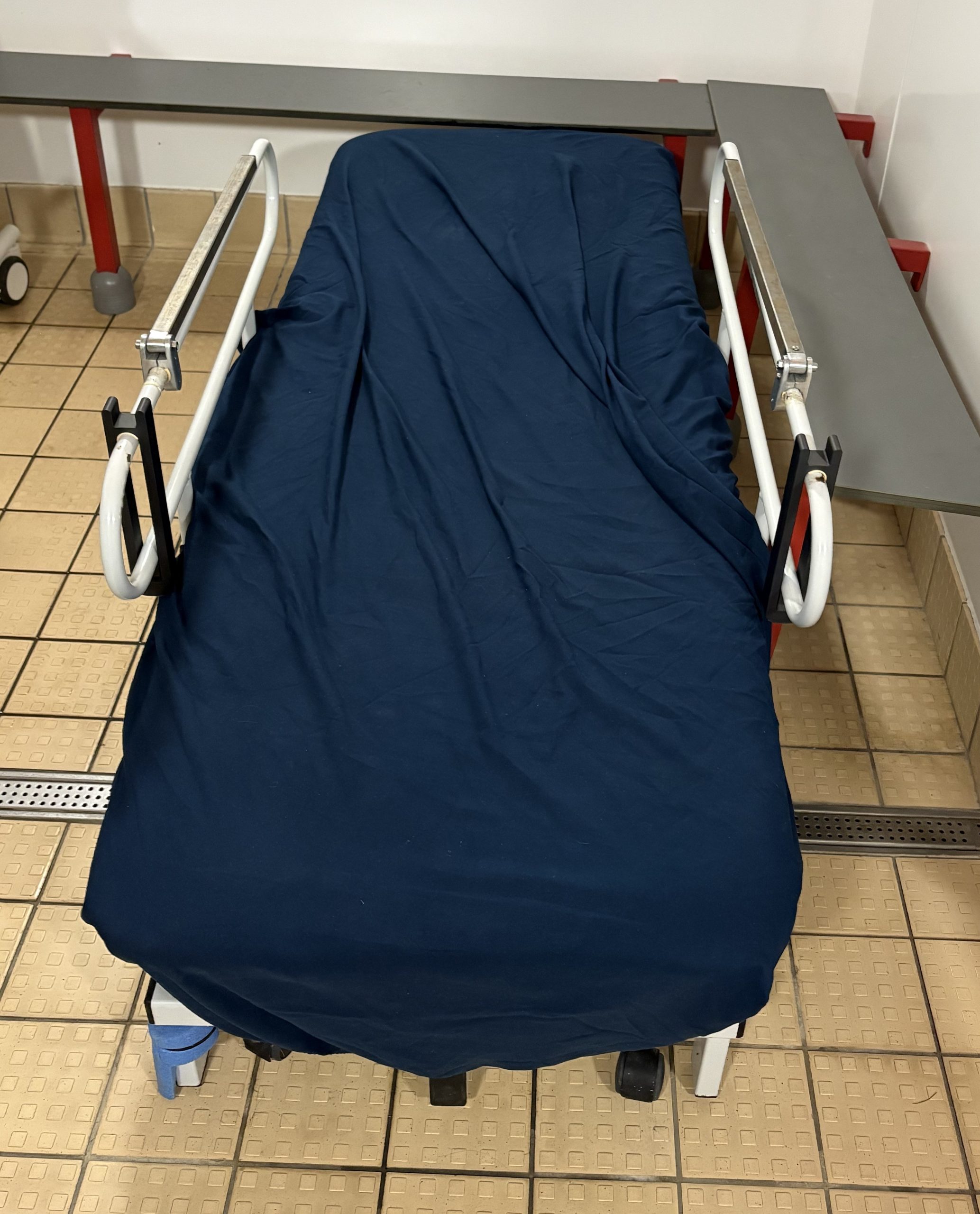
A removable, long-reach support handle was developed and securely clamped to the bed’s top rail.
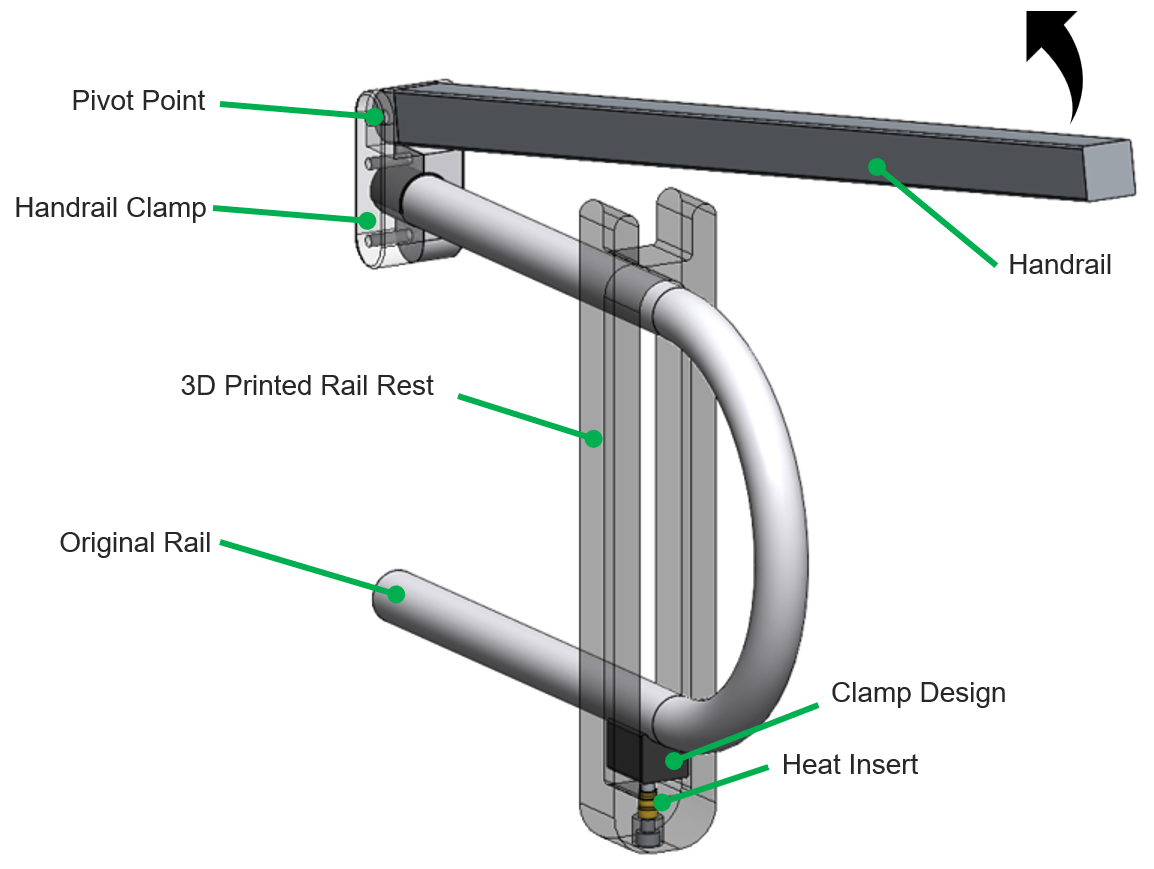
- Pivoting arm allows the support to swing out of the way for full wheelchair access
- Guiding/resting post (3D printed) with anti-rotation design clamps across both rails to ensure rigidity and safety. Providing a stable handhold and prevents slipping
- Load-bearing structure enables the student to safely transfer weight while changing
- Non-invasive fixing means the system can be installed and removed without damage
Once seated, the student can rely on the handle for support. After use, the arms pivot away, restoring full access to the bed.
Engineering Insight
The primary challenge was achieving a stable, load-bearing attachment to a smooth tubular rail without permanent modification. Preventing rotation and slip under body-weight loading was critical, addressed through a clamp design engaging both rails. A compressible rubber sleeve around the rail was introduced to increase friction and improve clamping performance, helping to resist slip under load. CAD file available on request.
The benefit
This small but carefully engineered adaptation has made a significant difference to the student’s rehabilitation experience.
- Increased confidence and comfort during changing
- Greater independence and reduced reliance on assistance
- Portable design allows use at multiple swimming centres
- Easy installation using everyday tools (Allen keys and a spanner / wrench) with no specialist engineering skills required
- Skills involved:
- Issues Addressed:
- Activities Helped:
- Location:
- Solution: